We’re a registered Medicare provider, but not with Medicaid or Dentaquest.
Can Invisalign Fix Your Bite? Understanding Orthodontic Benefits Beyond Straight Teeth


Invisalign is best known for straightening teeth among all orthodontic treatments. However, this innovative system offers far more than just cosmetic benefits. It can be a game-changer in addressing dental issues, including bite problems. For many patients, Invisalign provides a solution for improving bite alignment, leading to a more functional and comfortable bite and enhancing overall appearance. You’re in the right place if you wonder whether Invisalign can fix your bite.
This guide will explore how Invisalign can correct your bite and the many orthodontic benefits beyond just straightening teeth. We’ll break down everything you need to know and help you decide if this treatment is the right fit for you or your child.
What is a Malocclusion, and How Does It Affect Your Bite?
A malocclusion is a misalignment of the teeth and jaws that causes bite problems. Common malocclusions include overbites, underbites, crossbites, and open bites. When the teeth don’t fit together correctly, it can result in discomfort, difficulty chewing, and even speech issues. Over time, these problems can cause uneven wear on the teeth and contribute to TMJ (temporomandibular joint) disorders.
Invisalign gradually shifts teeth into proper alignment, improving bite and relieving discomfort. This treatment effectively addresses various types of malocclusions without the need for traditional metal braces.
How Does Invisalign Work to Fix Your Bite?
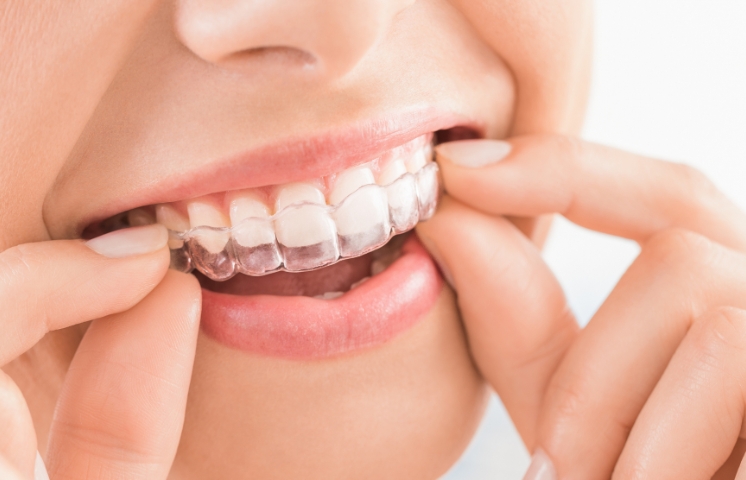
Invisalign uses a series of custom-made, clear aligners that gently move teeth into better alignment. Each aligner is slightly different, designed to fit snugly over your teeth while applying the necessary pressure to guide them into position. The aligners are worn for about 20-22 hours daily, and patients typically switch to a new set every two weeks.
Invisalign’s technology is so advanced that it can target specific issues, like fixing bite problems. For example, if you have an overbite, Invisalign can gently push the upper teeth back while pulling the lower teeth forward to achieve a balanced bite.
Types of Bite Issues Corrected by Invisalign
- Overbite: An overbite occurs when the upper teeth extend too far over the lower teeth. Invisalign aligners gradually push the top teeth back and the bottom teeth forward to fix this alignment issue.
- Underbite: In an underbite, the lower teeth are positioned in front of the upper teeth. Invisalign moves the upper teeth forward while repositioning the lower teeth to create a better bite.
- Crossbite: A crossbite happens when one or more teeth are misaligned horizontally, causing upper and lower teeth to misfit. Invisalign can correct this by shifting the teeth into their proper positions.
- Open Bite: An open bite occurs when the front teeth do not touch, making chewing and speaking difficult. Invisalign can close the gap, allowing the teeth to make proper contact.
- Crowding and Spacing: Misaligned teeth that are too close or far apart can cause bite problems. Clear aligners can create more space between crowded teeth or bring teeth with too much space closer together.
Advantages of Choosing Invisalign for Bite Correction
- Comfortable and Customized: Unlike traditional braces, clear aligners are made of smooth plastic, which reduces irritation to the gums and cheeks. They are also custom-made for each patient to ensure the best fit.
- Discreet Treatment: Invisalign aligners are clear and virtually invisible, which is ideal for individuals who prefer subtle treatment.
- Removable: Since clear aligners are removable, you can eat, drink, brush, and floss without restrictions. This makes maintaining good oral hygiene much easier compared to traditional braces.
- No Food Restrictions: With Invisalign, you can enjoy your favorite foods without worrying about getting stuck in brackets or wires.
- Fewer Office Visits: Invisalign requires fewer visits to the dentist than traditional braces, meaning less time spent in the dentist’s office.
Is Invisalign the Right Treatment for Fixing Your Bite?
While Invisalign is highly effective for many patients, consulting with a qualified dentist or orthodontist is essential to determine the right option for your specific needs. Not every case of malocclusion can be treated with clear aligners. Traditional braces or orthodontic treatments may be more appropriate for complex bite issues. Your dentist will evaluate your bite and recommend the best treatment plan tailored to your needs.
Invisalign can be an excellent solution for correcting bite problems and achieving a healthier, more comfortable smile. Whether you have an overbite, underbite, crossbite, or other malocclusion, Invisalign offers a comfortable, effective, and discreet way to align your teeth and improve your bite.
If you’re ready to explore how Invisalign can help improve your bite, contact our dental office to schedule a consultation. Our team of dental professionals will guide you through the process and create a personalized treatment plan tailored to your needs.